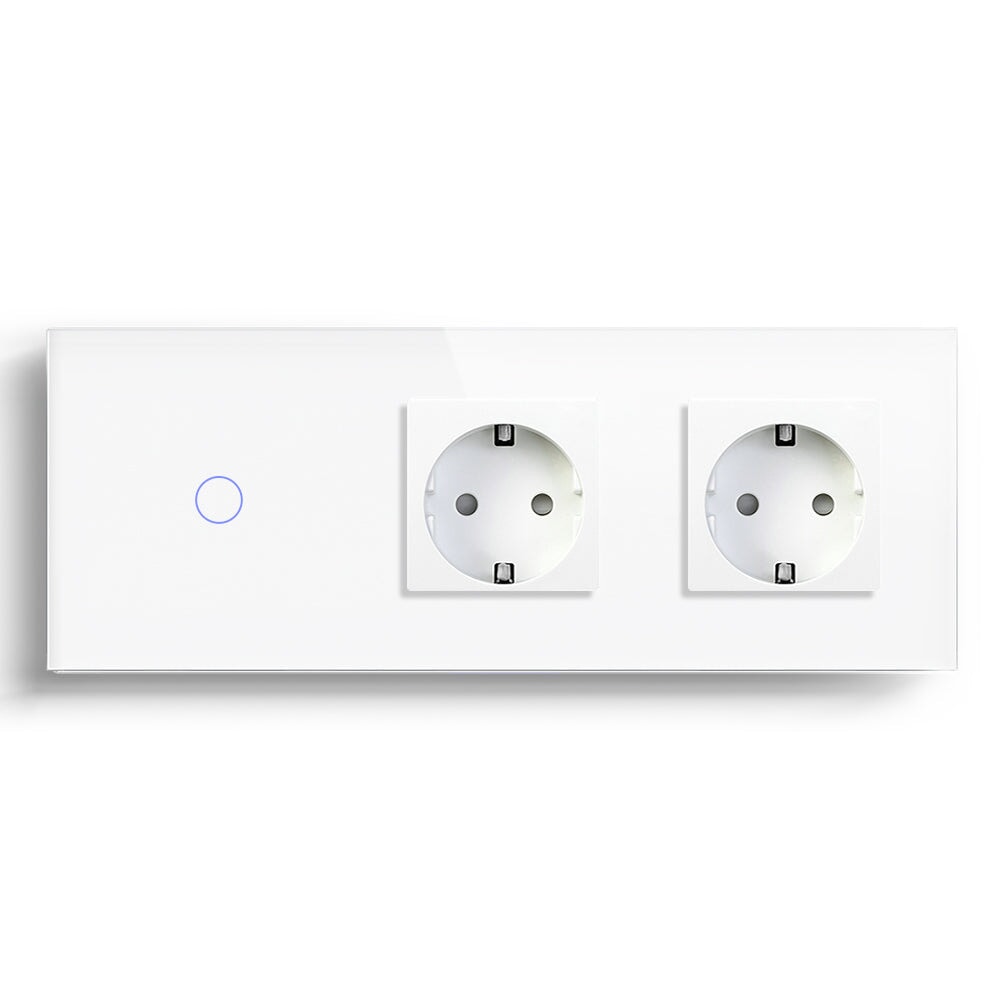
Smart Home Devices Compatible with Alexa, Google Home & Home Assistant
Voice control can make a smart home more convenient when it simplifies everyday routines. Instead of replacing physical controls, a smart assistant works best as another way to interact with smart home devices, including smart switches, smart sockets, thermostats, curtains and lighting.
For most families, the goal is not to make every part of the home voice-controlled. It is to choose compatible smart home devices that make common tasks easier while keeping the home simple to use.
The key question is not whether a device can respond to a voice command. It is whether that command saves time, feels natural, and still leaves the home easy to control when nobody wants to use voice control.
What Can Smart Assistants Do in a Smart Home?
Smart assistants such as Alexa, Google Home and Home Assistant can make everyday smart home routines easier.
Common examples include:
- Turning on a light when your hands are full.
- Running a lighting scene at bedtime or movie time.
- Checking whether selected smart sockets or lights are switched off.
- Adjusting a smart thermostat without reaching for a phone.
- Opening or closing smart curtains with a simple voice command.
- Helping children and older family members remember simple routines.
These functions are practical because they focus on everyday tasks rather than trying to automate everything.
A voice-controlled smart home does not need to be complicated. A few well-chosen devices can provide useful automation without changing the way a family normally uses its home.
Why Smart Device Naming Matters
Clear naming is one of the simplest ways to improve the experience of a smart home system.
A smart assistant needs to understand which device you are referring to. Names such as "Living Room Light," "Bedroom Light" and "Kitchen Socket" are easier to remember and use than technical labels such as "Channel One" or "Device 03."
The same principle applies to smart scenes and routines. Short, familiar names make voice commands easier for everyone in the household.
Good naming also makes the system easier to maintain when more smart home devices are added later.
Why Physical Wall Controls Still Matter
Voice control should complement physical controls rather than replace them.
A guest should still be able to turn on a light using a wall switch. A bedroom should remain easy to use if the WiFi connection is temporarily slow. A kitchen should still work if the smart assistant is unavailable.
This is why smart wall switches, smart sockets and smart thermostats remain important even in a voice-controlled smart home.
The smart assistant provides a convenient shortcut, while the physical hardware provides the foundation for everyday control.
A well-designed smart home should offer more than one practical way to control important devices.
Smart Home Devices by Type
Smart Lights and Switches
Smart lighting is one of the easiest places to start building a connected home.
A smart switch compatible with Alexa or Google Home can provide traditional wall control while also allowing voice commands and smart routines.
This makes smart switches suitable for bedrooms, living rooms, hallways and other frequently used spaces.
Starting with a few important lighting points can also be more practical than trying to automate every light in the home at once.
Smart Sockets and Plugs

Smart sockets are useful for selected plug-in appliances such as lamps and other everyday devices.
A smart socket can allow users to switch connected equipment on or off remotely, include it in a smart home routine, or control it with a compatible voice assistant.
For example, a living-room lamp can be included in an evening scene, while selected devices can be switched off as part of a bedtime routine.
Smart sockets compatible with Alexa or Google Home can therefore add automation without requiring changes to every appliance in the home.
Smart Thermostats
Smart thermostats can connect heating control with schedules, sensors and smart home routines.
Voice control can be useful for making small adjustments, such as changing the temperature when you are already comfortable on the sofa.
However, voice control should not be the only way to manage heating.
A good smart thermostat should also provide clear physical or app-based control and support schedules that match the household's normal routine.
Smart Curtains and Shutters
Smart curtain and shutter controls can work particularly well with voice assistants because the commands are simple.
Users may be able to say commands such as "open the curtains," "close the blinds," or trigger a predefined scene.
Curtain and shutter controls can also be combined with lighting to create routines for mornings, evenings or movie time.
Smart Wall Switches and Control Panels
Physical wall controls remain an important part of a connected home.

Even when a home uses Alexa, Google Home or Home Assistant, a wall switch or control panel provides an immediate and familiar way to control the room.
BSEED's smart home solutions include different types of smart switches and connected devices designed to combine everyday physical control with smart home functionality.
What to Check Before Choosing Compatible Smart Home Devices
Before buying a smart home device, it is worth checking more than the compatibility logo on the product page.
Consider these questions:
- Which smart assistant does the household already use?
- Is the device compatible with Alexa, Google Home or Home Assistant?
- Does it support physical wall control as well as voice control?
- Can it be added to the smart home system later?
- Does it support the connectivity standard the home is planning to use?
- Does the buyer prefer one ecosystem or greater platform flexibility?
Answering these questions early can make it easier to build a smart home system that works consistently across different rooms.
Alexa, Google Home and Home Assistant: What's the Difference?
Alexa, Google Home and Home Assistant can all be used to control smart home devices, but they are often used in different ways.
Amazon Alexa and Google Home are commonly used for convenient voice control, routines and everyday interaction with connected devices.
Home Assistant is often chosen by smart home enthusiasts, advanced users and installers who want more control over device integration and automation.
The right platform depends on how the household wants to use its smart home.
A device being technically compatible with a platform does not automatically mean it is the right choice for every project. Users should also consider how they want to control the device, which products they may add later, and how much flexibility they want.
Why Matter Compatibility Matters
For households that want greater platform flexibility, Matter smart home devices can be another important consideration.
Matter is designed to improve interoperability between supported smart home ecosystems. Depending on the specific device and setup, Matter-compatible products can make it easier to build a connected home without committing every device to a single platform.
For buyers planning to use different smart home platforms over time, checking Matter compatibility can therefore be useful when choosing new devices.
BSEED's Matter series is one option to explore when cross-platform smart home compatibility is an important part of the project.
What Does a Mixed Smart Home Need?
Not everyone in a household uses smart technology in the same way.
One person may prefer voice control. Another may use the mobile app. Someone else may simply want to press the wall switch.
A well-planned smart home should accommodate all of these habits.
This is why compatibility should be considered from the perspective of user behaviour, not just a list of supported platforms.
The more natural the controls feel, the easier the system is likely to be for different family members to use and understand.
Build a Smart Home That Works Beyond Voice Control
A smart assistant should sit on top of a home that already works well.
If a room only feels smart when a voice command is recognised perfectly, the system may be relying too heavily on one control method.
A better approach is to combine:
- Physical wall controls
- Mobile app control
- Voice assistants
- Smart scenes and schedules
- Compatible smart home devices
Each layer has a different purpose.
The wall switch provides immediate control. The app provides detailed management. Voice control provides convenience. Automation handles repetitive routines.
Together, these functions can create a smart home that feels useful without becoming unnecessarily complicated.
Explore BSEED Smart Home Devices
Choosing compatible devices is easier when the smart home system is planned around the way people actually live.
BSEED offers a range of smart switches, smart sockets, thermostats, curtain controls and Matter-compatible devices for different areas of the home.
Start with the BSEED Smart Home collection to explore the wider range of connected home solutions, or visit the BSEED Matter Series when platform flexibility is an important consideration.
The Smart Home Should Still Feel Simple
Smart assistants are most useful when they make normal tasks easier.
They should not become the reason a room feels difficult to understand.
The best smart home devices are those that provide useful automation while remaining intuitive through physical controls, apps and voice commands.
Whether a household uses Alexa, Google Home, Home Assistant, Matter or a combination of platforms, the goal remains the same: make everyday life easier without making the home harder to use.
A smart assistant is a convenient layer. The switches, sockets, thermostats and other devices are the foundation.
A smart home works best when both layers work together.