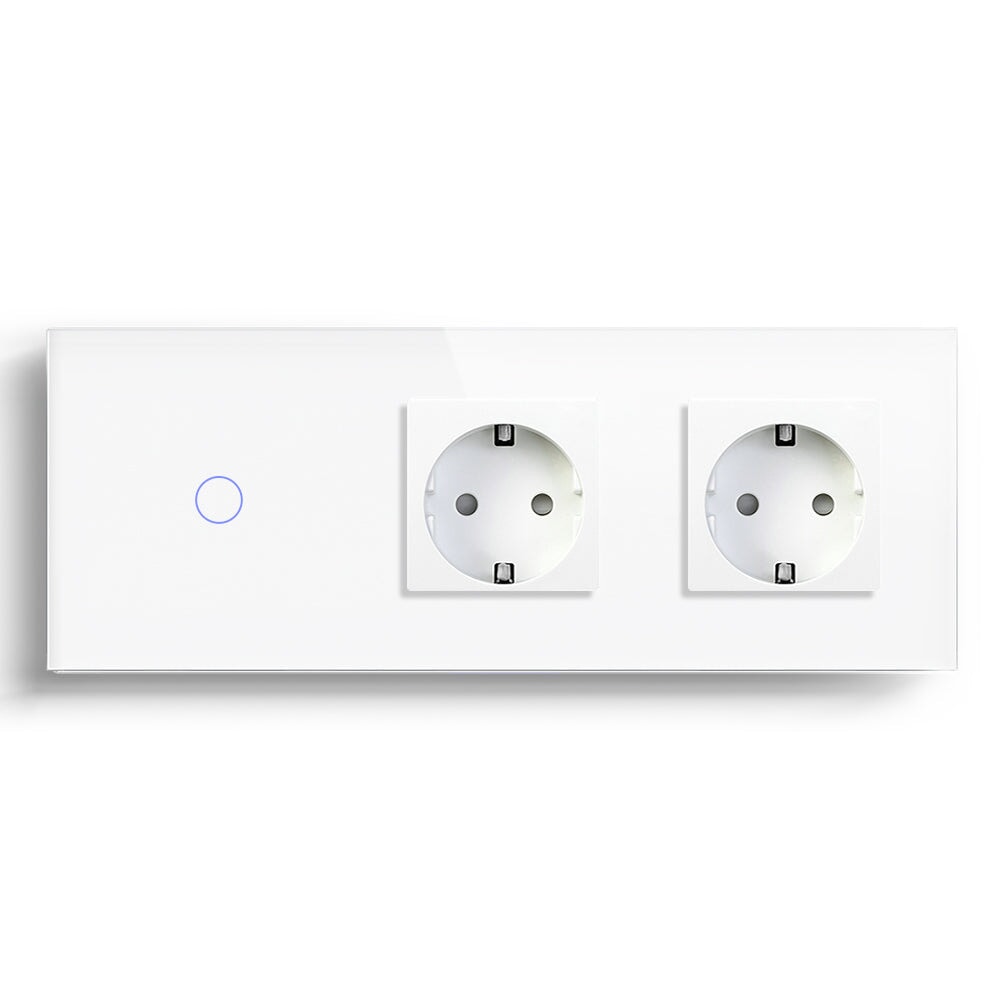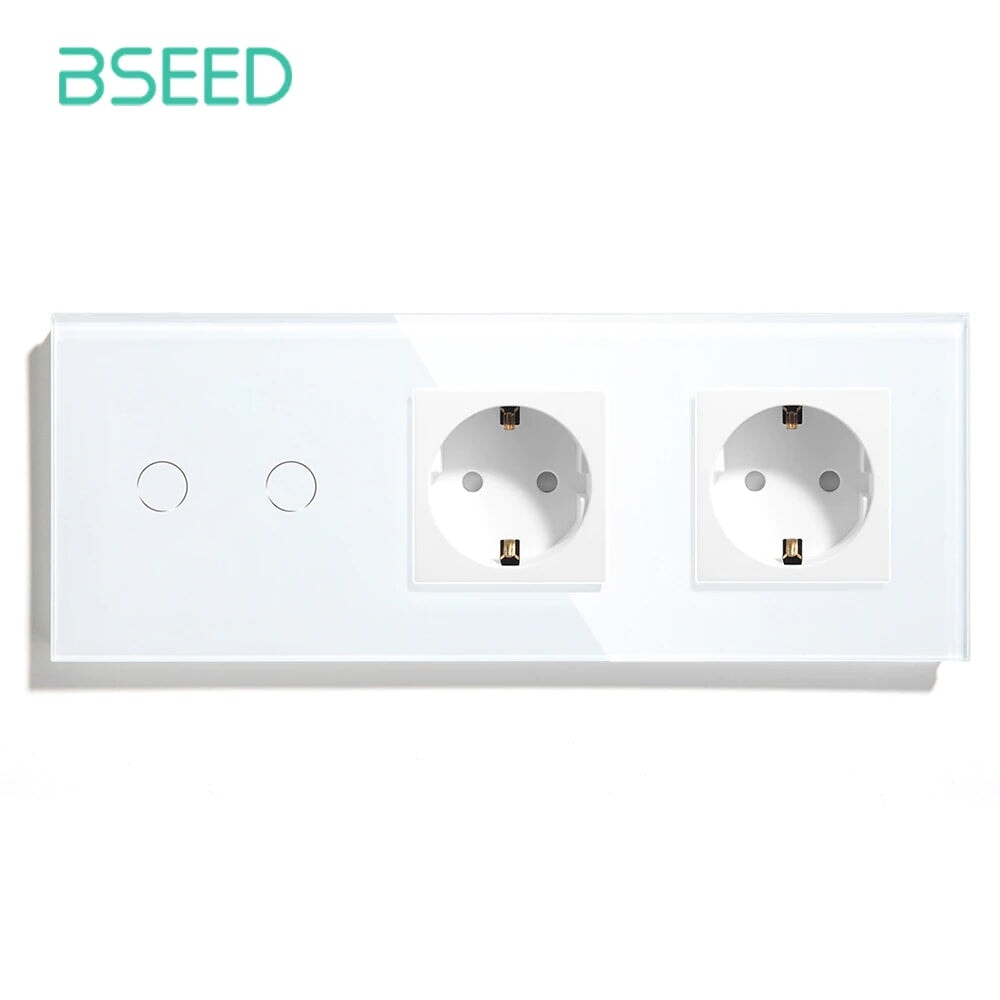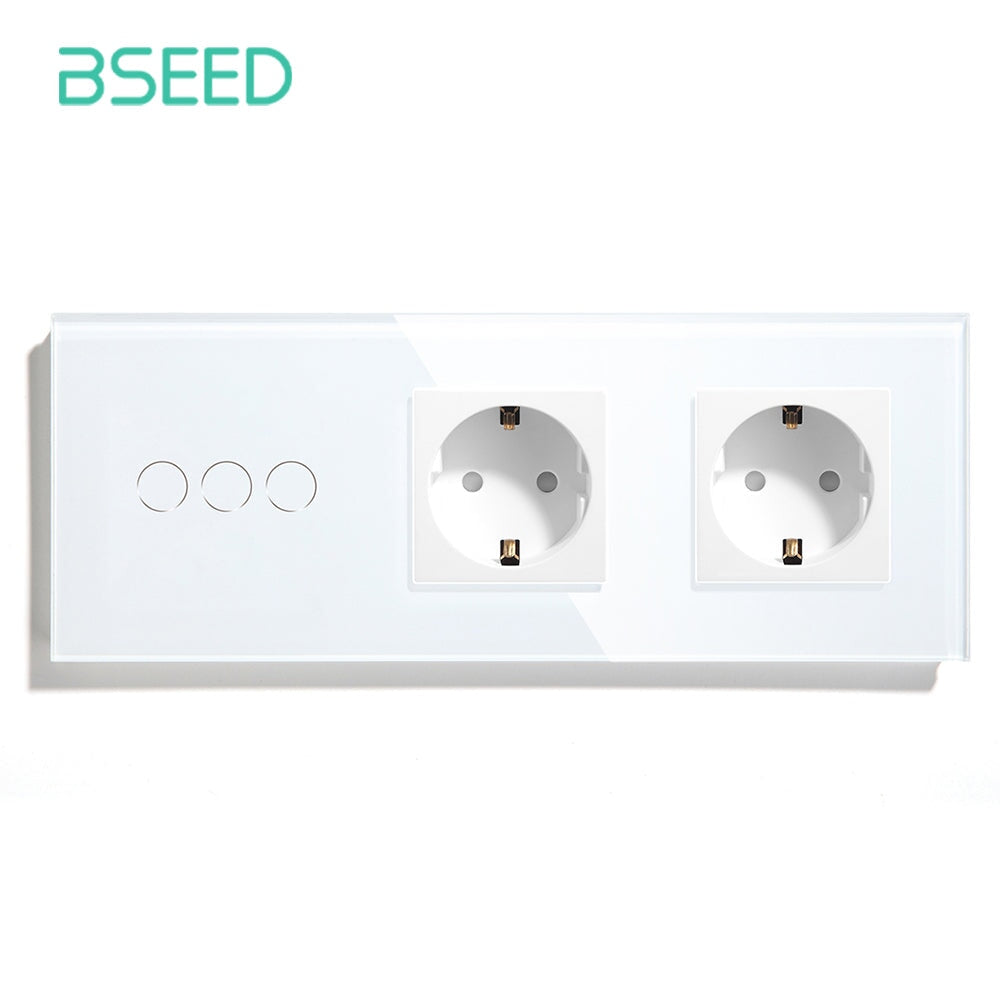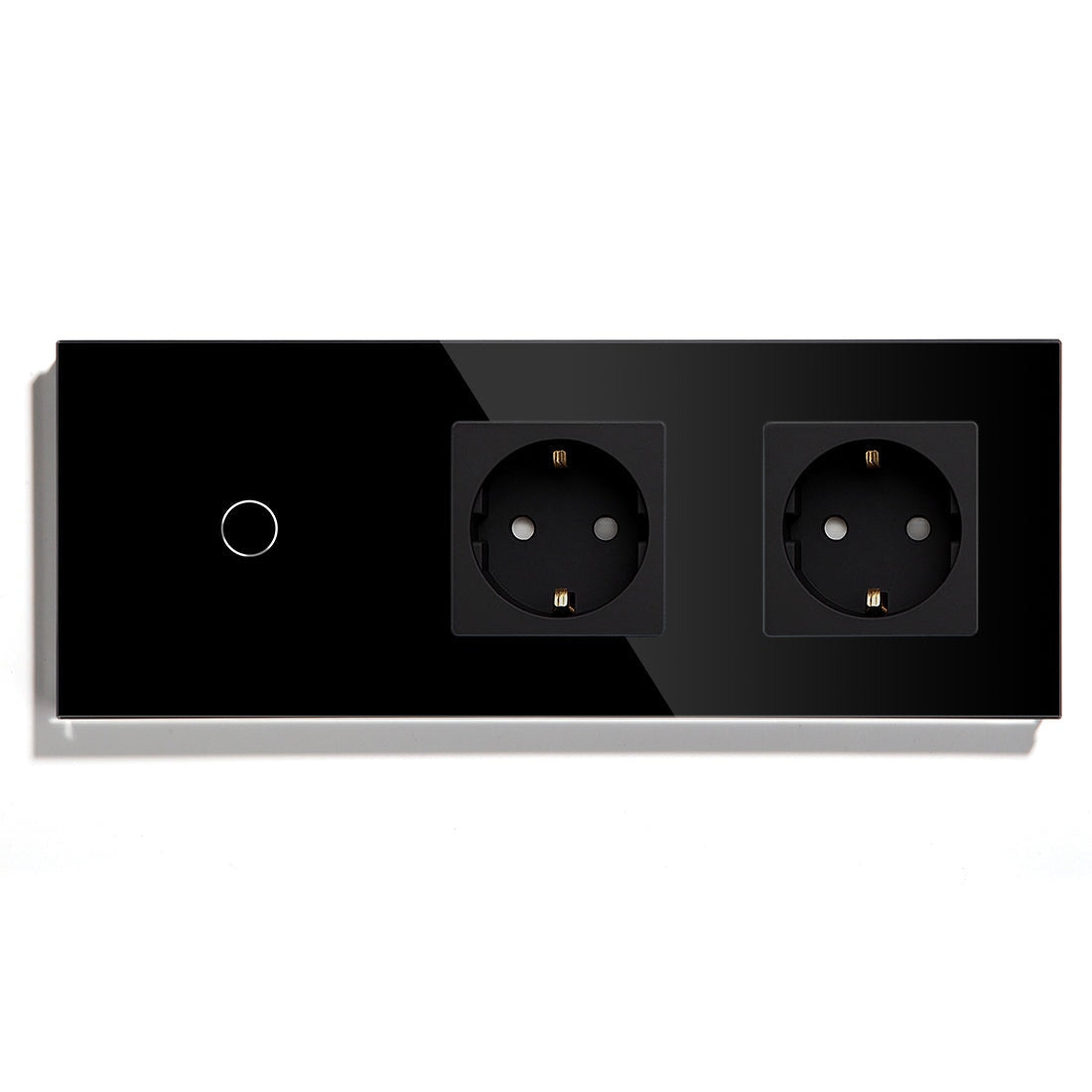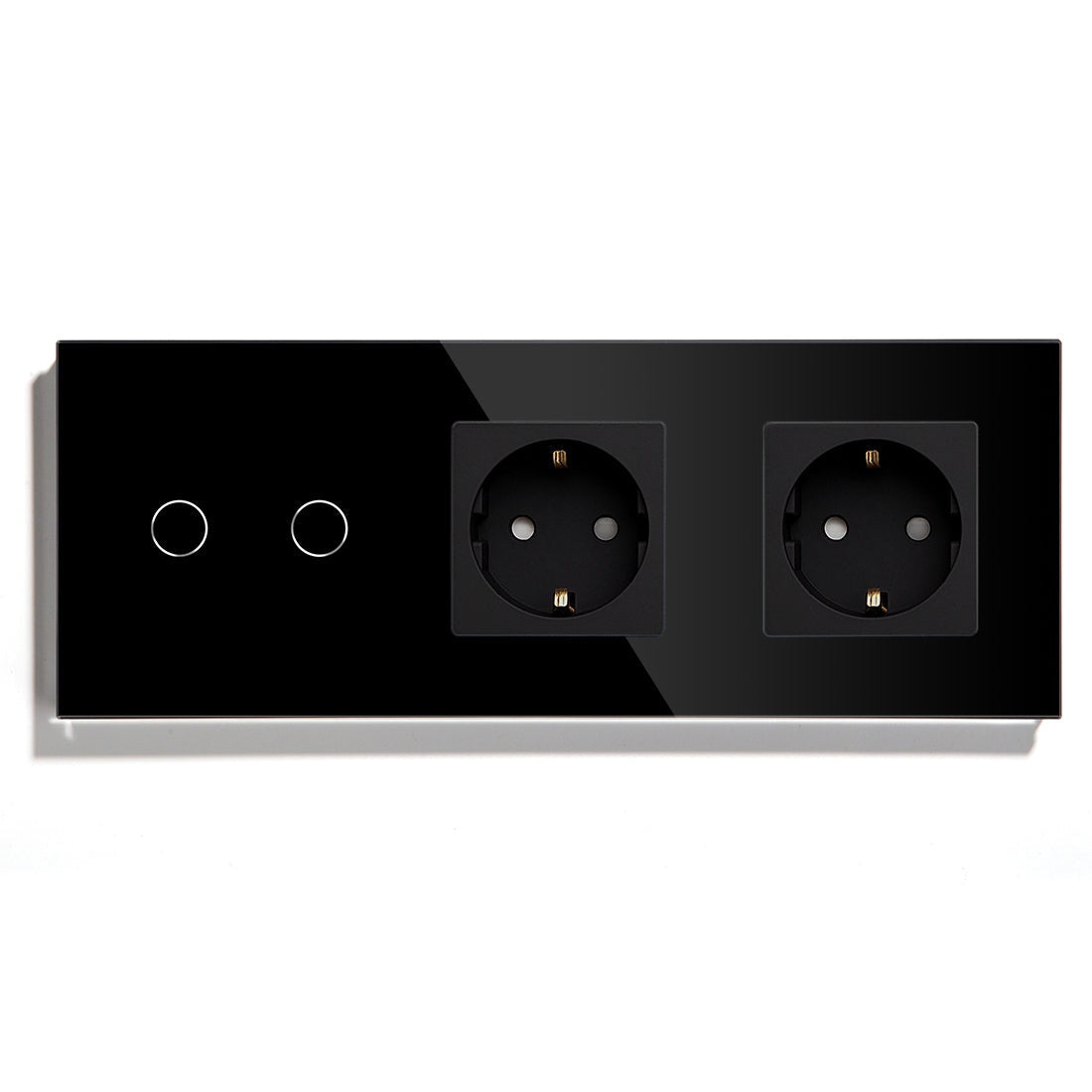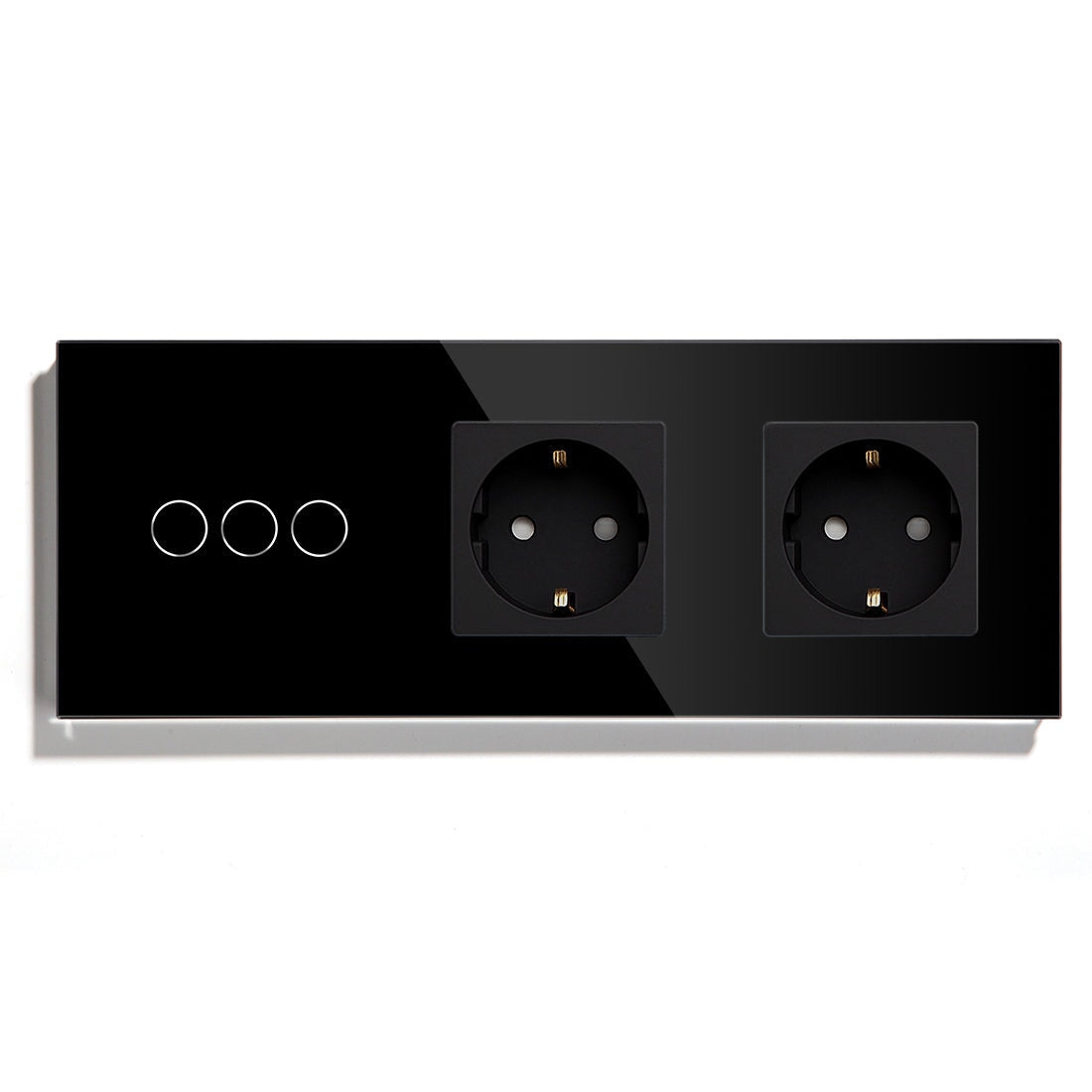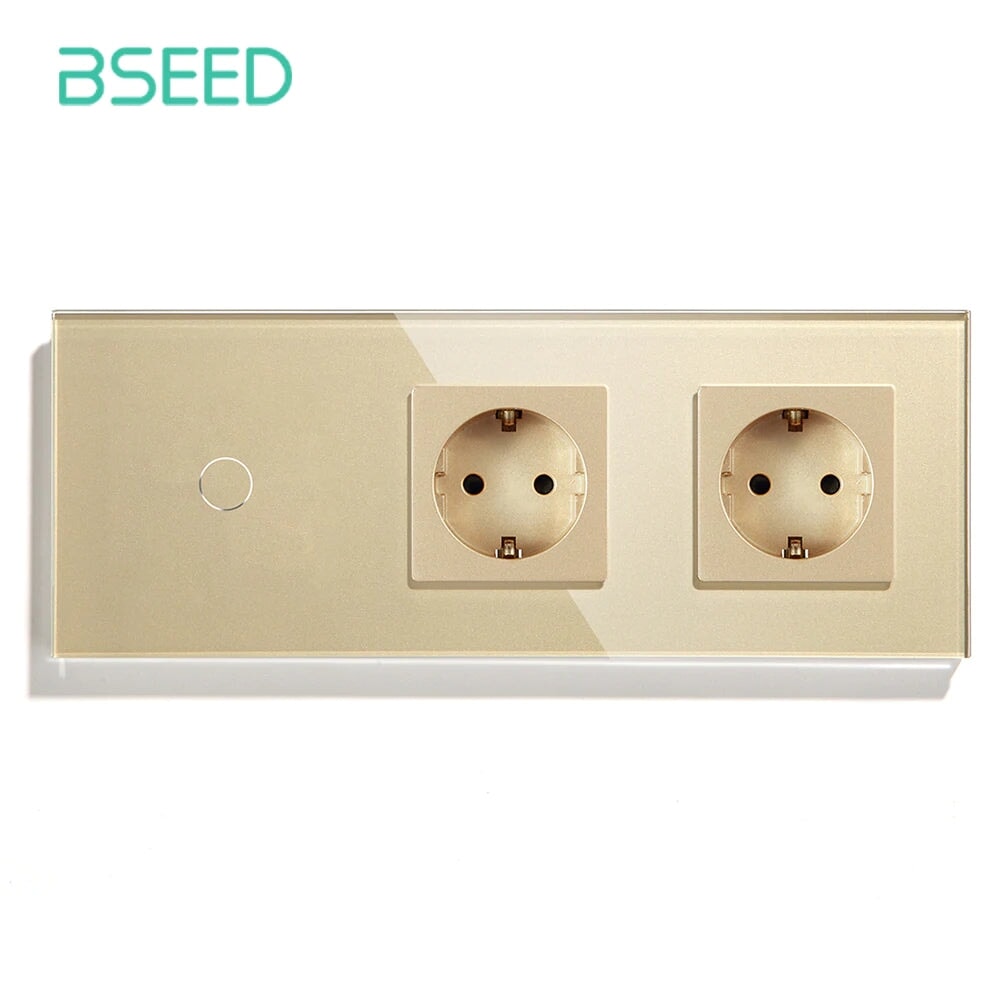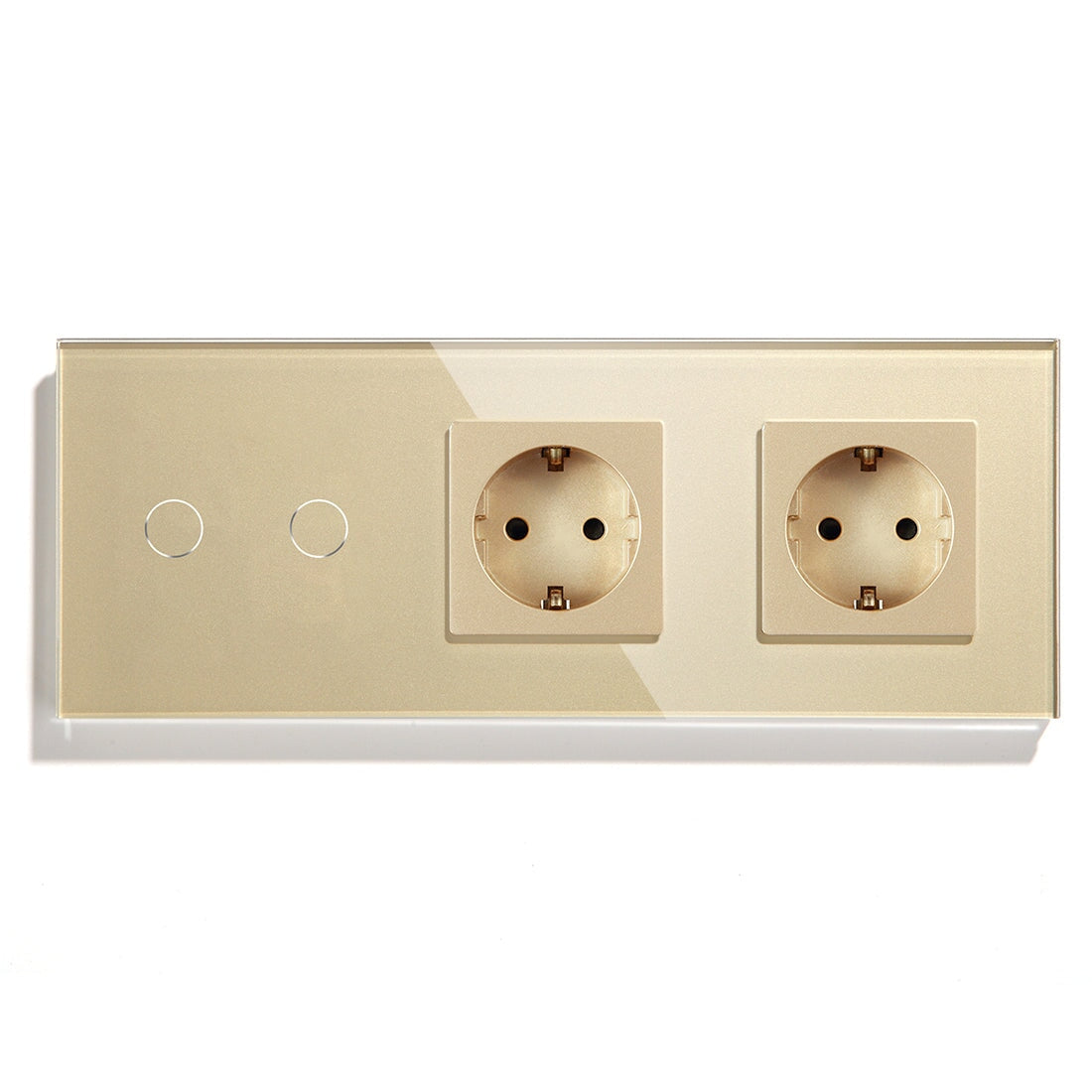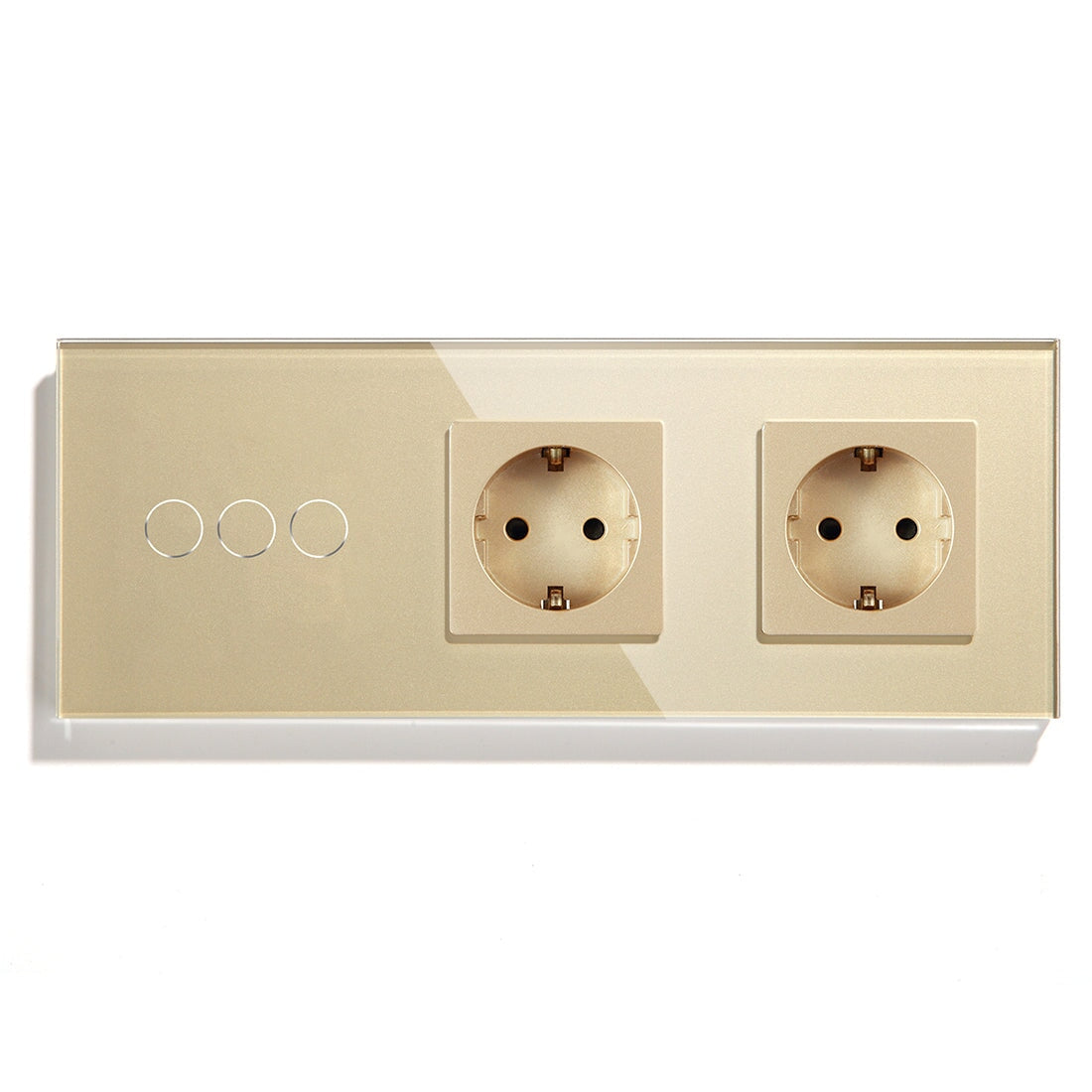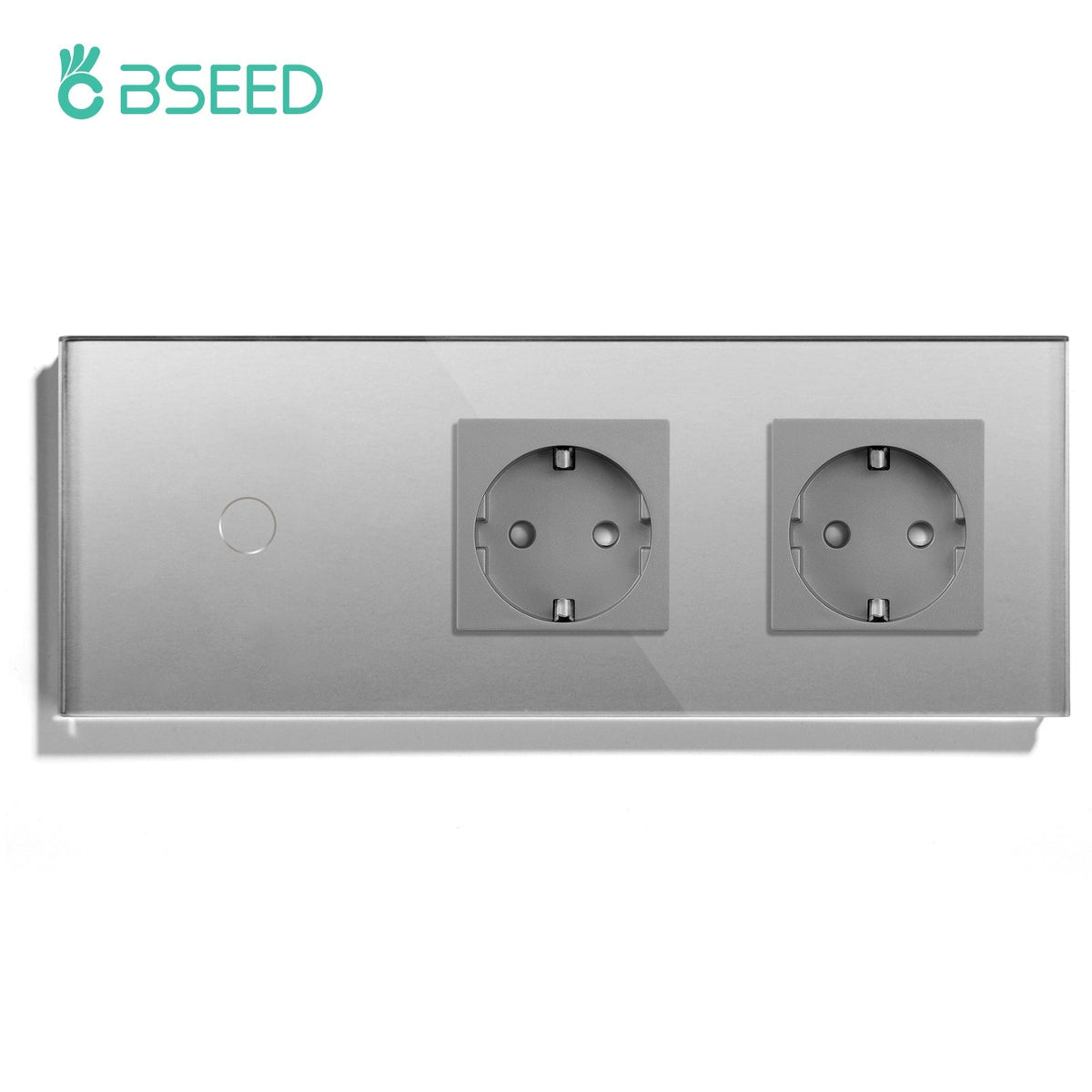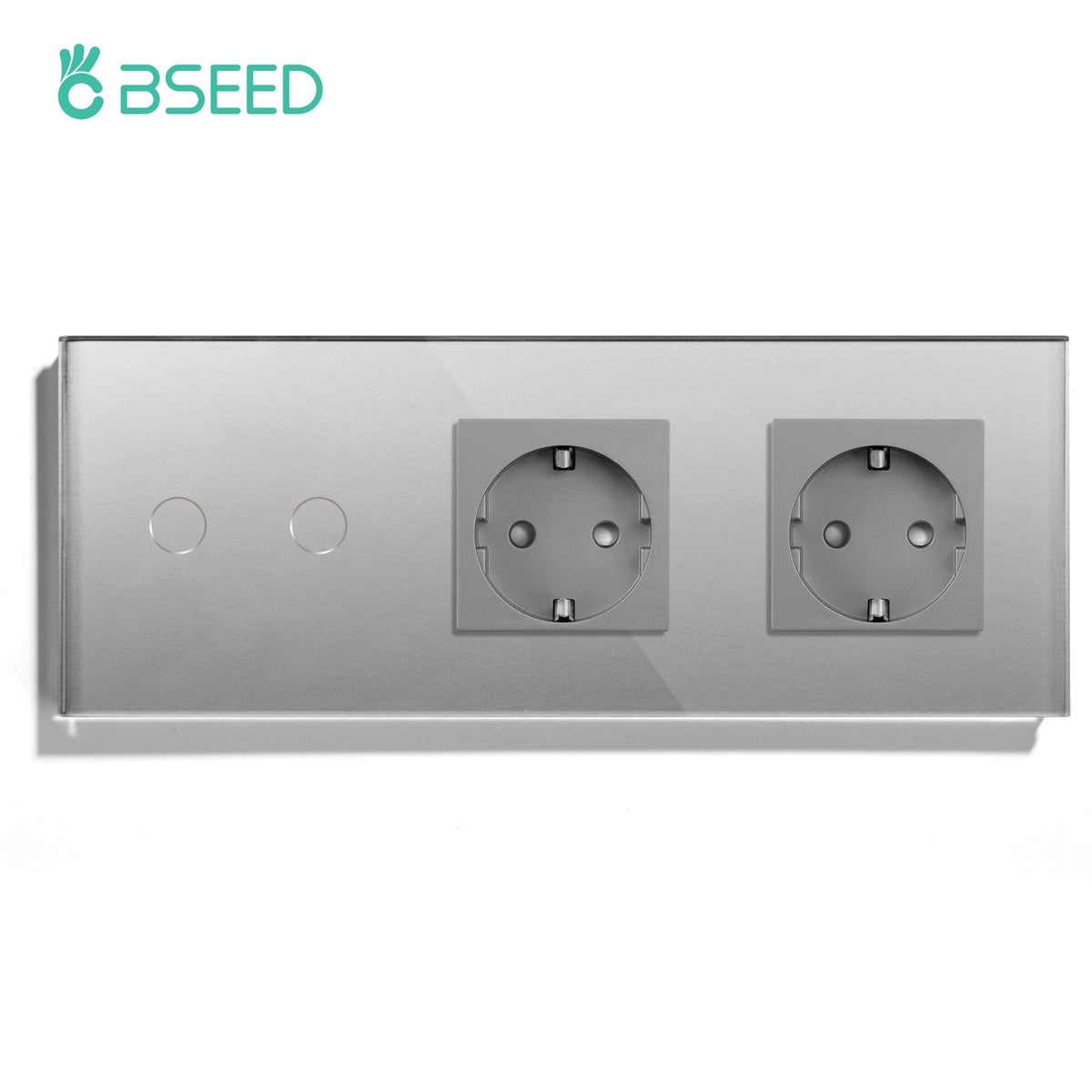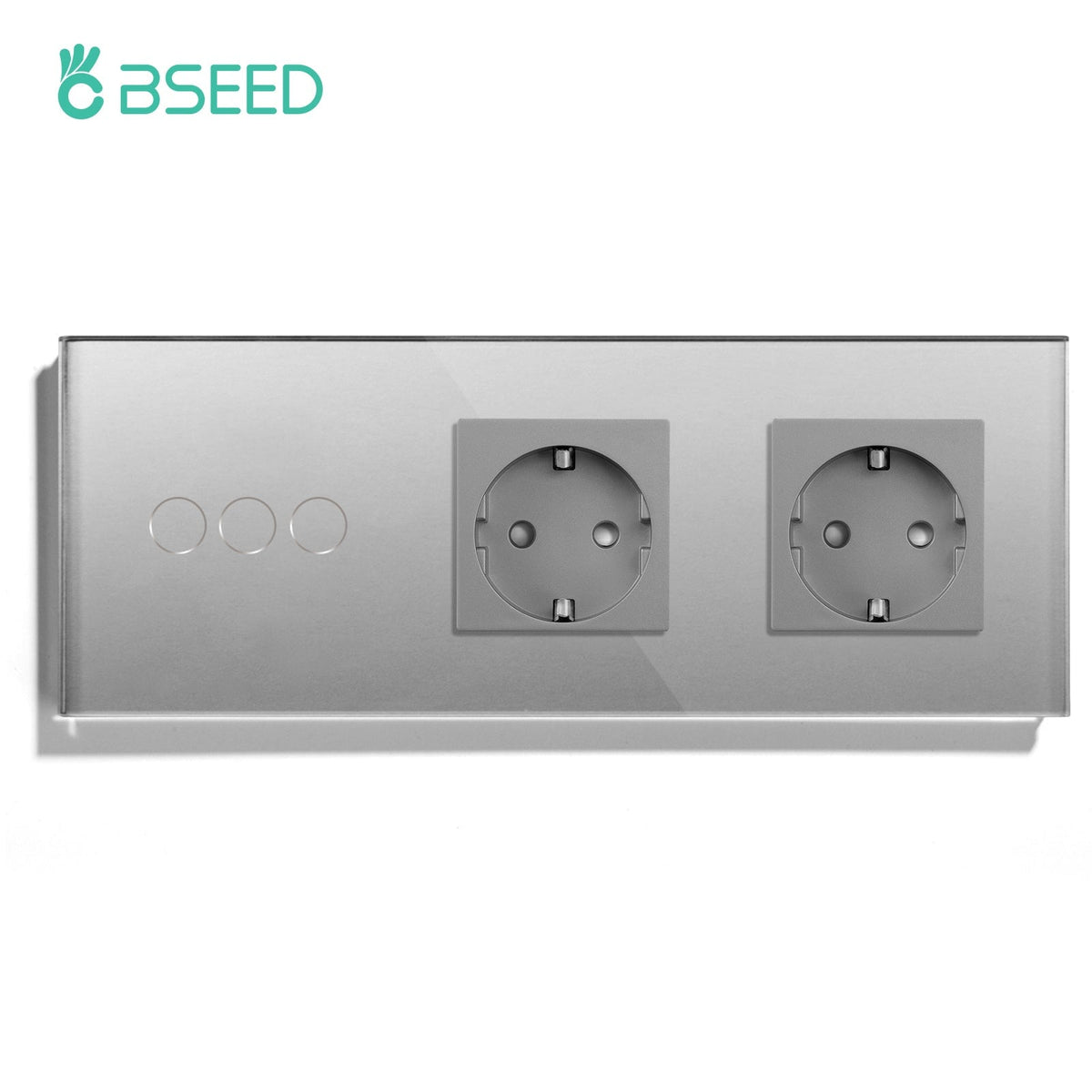
BSEED Glass Panel Smart Socket for Luxury Interior Design

By 2026 in luxury residential projects
By 2026 in luxury residential projects, the smart socket is no longer an afterthought hidden utility element. It’s incorporated into the visual idiom of the walls either as a touchpoints in its own right.
Glass panel smart sockets evolve to be surface spaces of electrical access rather than strictly functional access points to power. When properly incorporated into smart-switch ecosystems and Zigbee 3.0 mesh networks coupled with Matter comfort layers they are both a control as well as design element. BSEED among others makes this transition possible by combining touch glass smart switch systems, smart socket with energy monitoring, and smart home control panel with Zigbee integration into a simpler wall aesthetic.
A glass panel smart socket as layer of controlling, not just power
We’re making a seamless blend of our architectural instainct to treat the wall power touchpoint as a part of our lighting design coordination. A glass panel smart socket is adjacent to…
· Touch glass smart switch
· Glass panel smart switch
· Smart home switch panels with unified UI
· Wifi touch light switch system in secondary zone
· Smart curtain switch with WiFi and zigbee roller shutter switch integration
What changes in 2026 is not appearance, but hierarchy of interaction. The socket is no longer “hidden behind furniture logic,” but intentionally co-collocated at interaction height. In high-end residential projects in Singapore and Dubai, design firms finding that replacing standard sockets with glass panel smart ones reducing visual fragmentation from walls by around the 30–45% range, simply because all elements from lights to sockets to thermostat zones can usefully be framed nicely together.
The Electrical Architecture Behind a Glass Panel Array
“A smart socket is not a dumb socket under a glass panel”. Inside one, a glass panel smart socket might contain:
relay switching module (mechanical or solid-state) microcontroller unit (MCU for executing local logic) communication module (zigbee / wifi / matter bridge layer) energy monitoring chip (for smart socket with energy monitoring) thermal protection circuit (typical device cutting threshold is around 85 degrees C)
When paired with zigbee switch or zigbee 3.0 switch networks a glass panel socket becomes a part of a local mesh. When paired with matter smart switch systems it partakes in cross-ecosystem control abstraction.
A detail that veteran installlers are loath to advertise: glass panel sockets do rely heavily on the correct design for heat dissipation inside, since sealed aesthetic frames mean less passive airflow than in older mechanical switch tech.
The Wiring Reality That Affects Luxury Installations
Luxury projects will imply a standard wiring layout, but of course field conditions must be accounted for, especially in retrofits of villas and European-style apartments.Key Configurations
Other key configurations include:
· smart switch without neutral wire
· wifi light switch without neutral wire
· zigbee light switch without neutral
· smart wall switch for European homes (single live-line systems)
In a no-neutral environment the glass panel system essentially has to have: Battery backup of shutting down LEDs on glass power button, internal leakage current is required to keep MCU standby circuits lit, ultra-low load LED compatibility even becomes unstable for some dimming scenarios, increase flicker sensitivity when paired with smart dimmer switch for LED lights.
Installers working on premium projects prefer to run neutral lines through renovation procedure even if no-neutral modules exist. Long term stability becomes more important than installation inconvenience.
One practical field observation: in hotels that deploy no-neutral glass panel systems customers complain of LED flickers far more often in corridors than they do in the bedrooms themselves; why? Simple, less base load on that circuit.
Protocol Layering: WiFi, Zigbee and Matter in Glass Panel Systems
Glass panel sockets are rarely now single-protocol devices.
WiFi systems
Including:
· wifi light switch
· wifi light switch without neutral wire
· smart curtain switch with wifi
Used in:
· low density apartments
· Retrofit luxury units with minimal rewiring
· Secondary/waypoint lighting zones
Limitation becomes apparent only when systems exceed 12-15 connected endpoints. Latency and cloud dependency results in inconsistencies in the way scenes are executed.
Zigbee 3.0 Ecosystem
Includes:
· zigbee light switch
· zigbee 3.0 smart light switch
· zigbee smart switch for home assistant
· zigbee roller shutter switch
· tuya zigbee smart switch
In luxury projects Zigbee forms the (local) backbone. Performance metrics integrated into multi-room Villas:
switching latency: 80–160ms mesh recovery time post-node failure: 3-8 seconds stable node density: 20-120 devices per coordinator
An installer-centric quirk: Zigbee inherently becomes more reliable when glass panel sockets double as powered routing nodes rather than mere endpoints.
Matter control layer enabled
Involved parties:
matter smart switch matter light switch matter compatible smart light switch smart home devices compatible with Matter
How is Matter different from Zigbee? It does not supplant mesh routing but centralises control of ecosystems like HomeKit, Google Home, Alexa and Home Assistant
Real world insights:
Matter - simplifies user control layers Zigbee - preserves device-to-device communication integrity WiFi - retained for edge and standalone devices
Smart Socket Functions for Luxury Use Cases
Glass panel smart sockets are often bundled with:
· smart socket with energy monitoring
· wall socket with USB C charging modules
· smart thermostat for floor heating systems
· touch screen smart thermostat integration
· waterproof outdoor wall socket (intended for terraces and the garden villas)
In luxury Villas, energy monitoring socket user paths tend to learn: visibility of idle consumption tangentially reduced energy not used: 15-22% of hidden standby use, even without any automation rules defined, just by users viewing dashboards of their energy habits.
The Design Trade-Off beneath Glass Panel Systems
What this boils down to is quite simply; users forego the structure of tactile feedback behind their blinds for structural continuity. When in the dark, users resort to muscle memory over tactile confirmation. And it strikes one when you’re inside this is a product of fitting.
hotel corridors
staircases
cinema rooms
Installers have tried to mitigate this by adding backlit icon zoning or haptic click feedback, but these make things more complex and more heat-dense inside the frame of the socket.
For “luxury” scenarios, integration of curtains, dimmers and thermostats
It’s rare to have glass panel systems acting alone, they are integrated within a coordinated ecosystem of walls
· roller shutter switch / zigbee roller shutter switch for dealing with daylight
· smart dimmer switch for LED lights for ambient tuning
· smart thermostat for floor heating for thermal zoning
· smart home control panel with Zigbee acting as door to everything
In high end residential automation design, it has become a standard process to not break out physically lighting, shading and HVAC into subsystems, but to treat these all as a single “comfort loop”.
Here’s a tested rule-of-thumb, from a recent city center build: “when we began moving away from dimming / shutter / thermostat logic merging over the cloud to controlling this locally (via zigbee or home assistant switch layer), the feeling of comfort stability flows up when it’s done well, faster than investing in more sensors.”
Hierarchy of Devices. Alexa / Google home / Home Assistant
Glass panel smart sockets conceptually push three levels deep into control hierarchies
Cloud first
smart switch compatible with Alexa
smart switch compatible with Google Home
wifi light switch ecosystems
Best suited for:
short-term rental luxury units
hospitality environments with little technical maintenance
Local automation environment
home assistant switch
smart switch compatible with home assistant
home assistant compatible switch
Best suited for:
smart villas
high-density automation homes
energy-optimized buildings
Fieldwork that ripples through designer notes when visiting sites: systems become considerably more stable when the 60% of the boat that didn’t go to cloud is locally routed via Zigbee rather than putting things through cloud routed WI-FI.
Choosing Glass Panel Smart Sockets
A practical engineering decision method used for luxury projects goes like this:
Step 1: What’s the interior grade we’re working on again?
standard luxury apartment → hybrid WiFi + Zigbee
high end villa →ZG + Matter backbone
hospitality/hotel →ZG centralized + tightly controlled WiFi edge
Step 2: Where are we on wiring condtion?
neutral available → go for för full dimming + smart socket integration
no neutral → prefer ZG but limited use of WI-FI
Step 3: How much density are in function controls
lighting only → WiFi okay
lighting + shading → must be ZG
lighting + HVAC + sockets → Matter +ZG hybrid
Step 4: How how many materials are getting integrated together
matte wall finish → no glass reflective systems
marble/glass interior→align glass panel systems with aesthetics
An Engineer’s Closing Thought
on glass panel smart sockets being as much about electrical engineering as they are about interior architecture.
When you land in an expensive build, the most stable and untroubled environment (far as we hazard to call it a “zone”) lands between zigbee being in its place upstream and Matter as its translation layer. WI-FI needless to say on the periphery; and glass panel sockets as the most exposed surface of the three beneath.