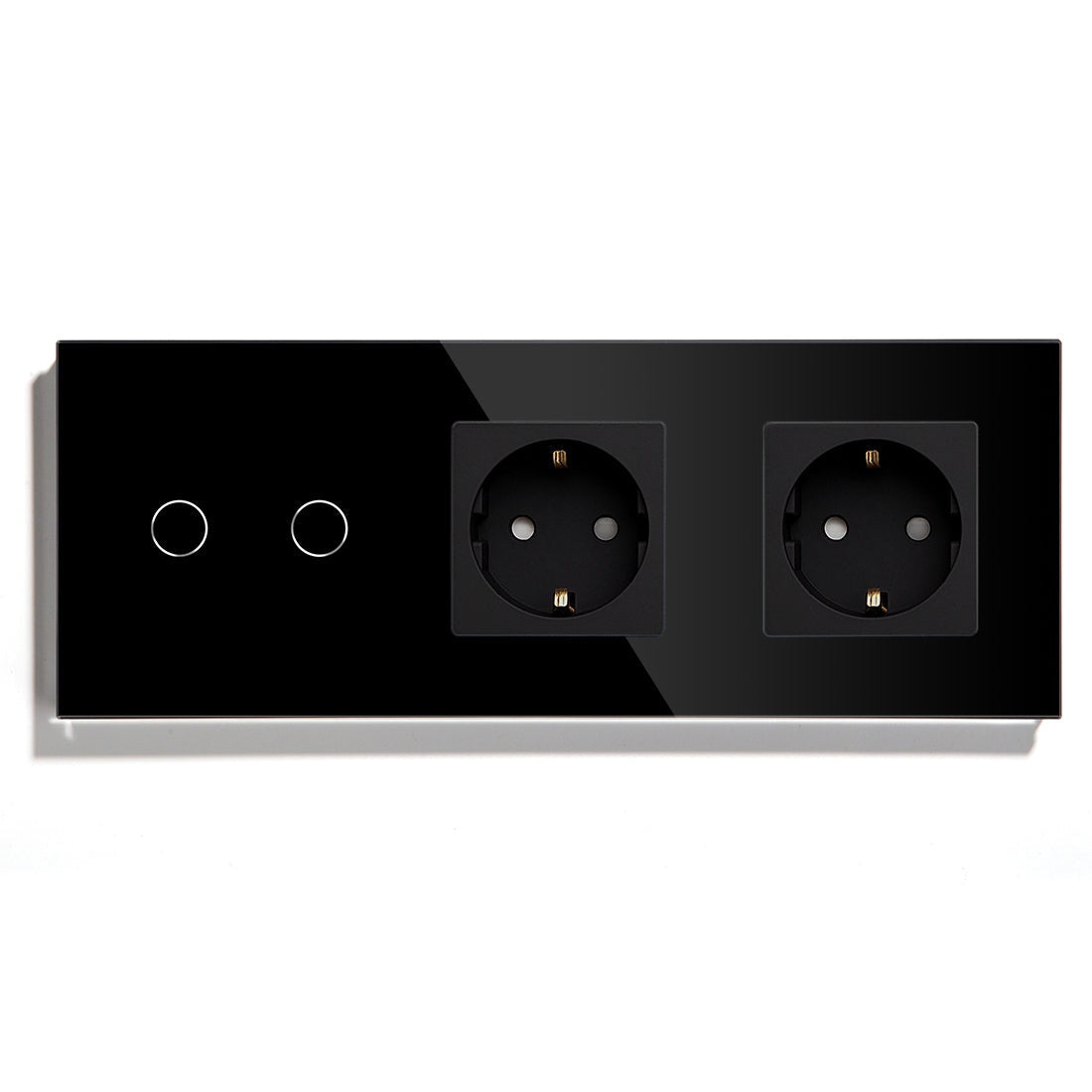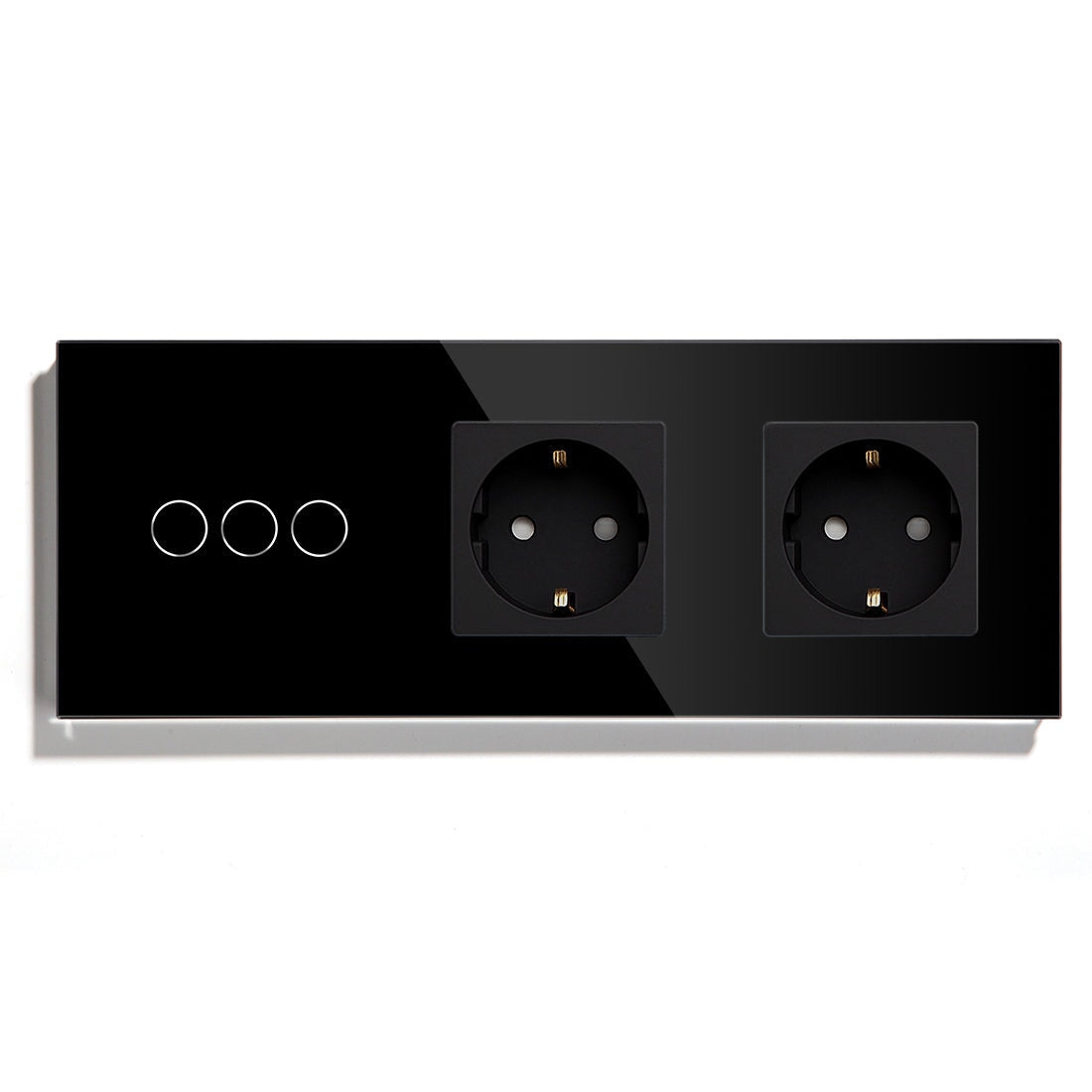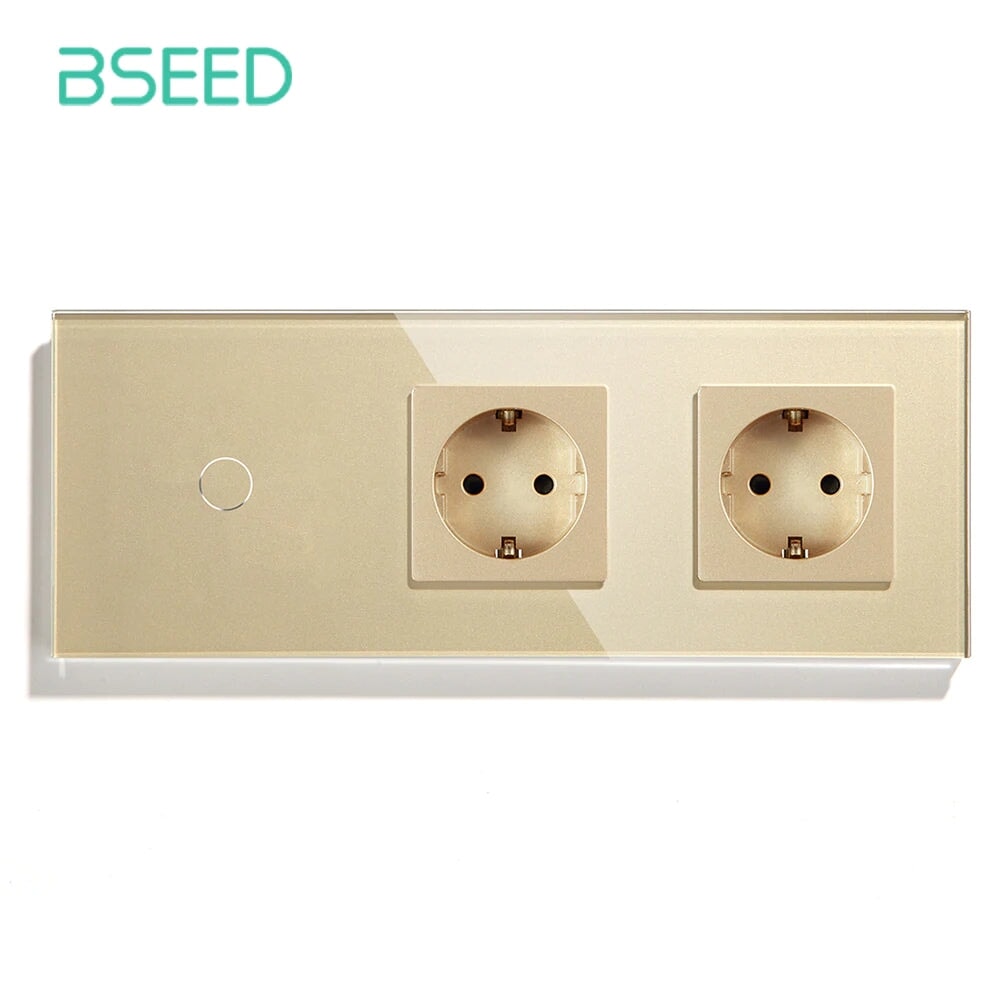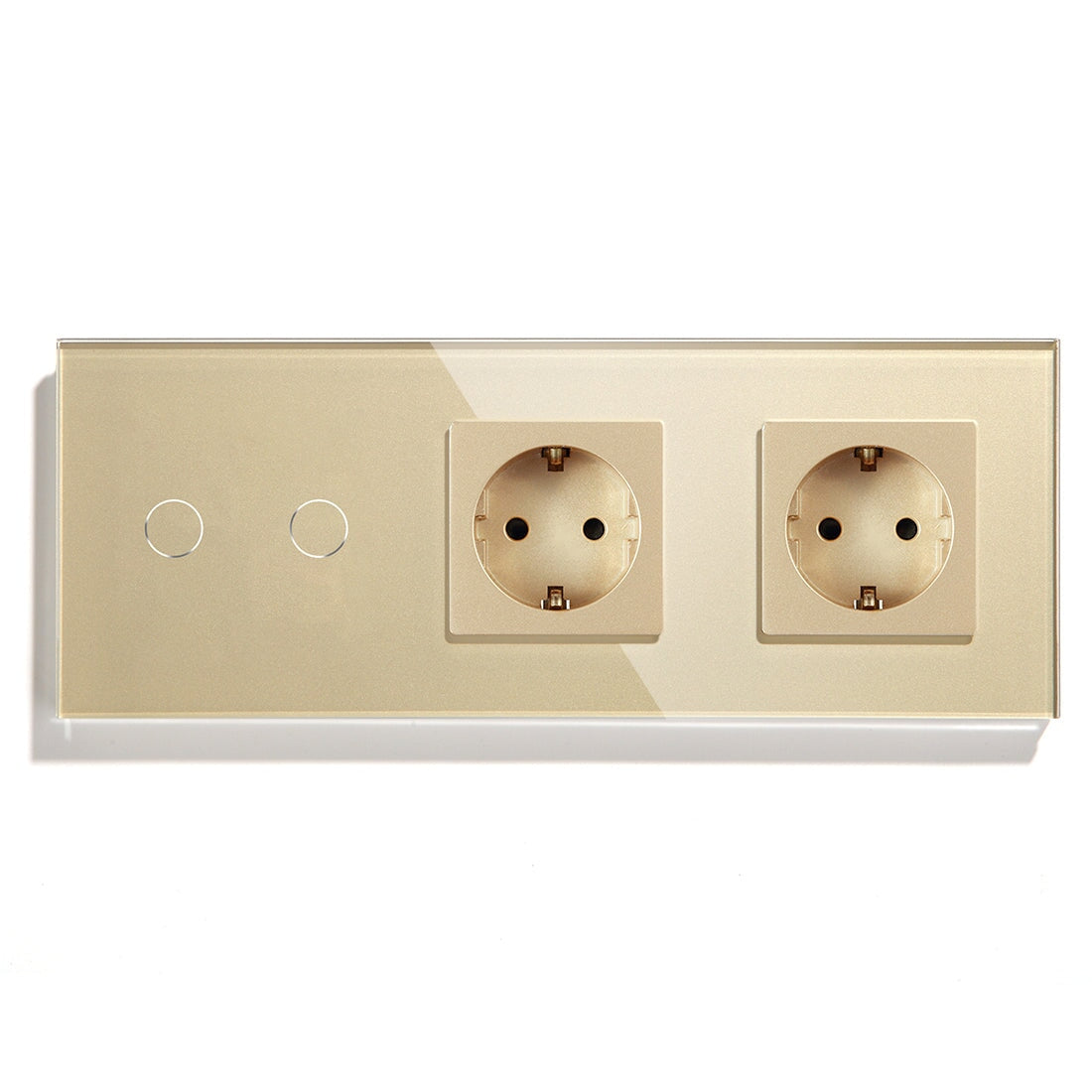
BSEED Matter Light Switch: The Future of Cross-Platform Smart Homes
By the year 2026, what’s changed in our industry is no longer whether or not a smart switch connects to WiFi or pairs with a mobile app.
The competition is all-around cross-platform reliability, local automation stability, and being ecosystem agnostic.
This is why the Matter light switch category has exploded into becoming the fastest-growing category in the European smart home market, especially for projects hitting on renovations, energy optimization, and Home Assistant integration.
Installers who had their own ecosystem for Alexa, Google Home, Apple HomeKit, Zigbee gateway, and Tuya app, are now moving toward a consolidated control architecture where lights chat using the Matter standard while being able to execute locally.
Manufacturers like BSEED Smart Home are pushing this migration along by making:
· Matter-compatible smart light switch systems,
· smart light switch platforms using Zigbee 3.0,
· WiFi light switch without neutral wire solutions,
· Home Assistant compatible switch ecosystems,
· touch glass smart switch designs exclusively for European homes,
· smart thermostat and smart socket on the same multi-purpose vehicle,
· smoky smart home control panel support with Zigbee.
These are the next generation of smart wall switches. Less like a widget and more like a node of distributed infrastructure inside the house.
Why Matter Became Important After 2024
The first generation of smart switches were overly oriented toward remote control.
The second generation responded more to voice assistants.
The third wave that reaches installations in 2026 is focused on three practical problems:
1. Platform fragmentation
2. Cloud dependency
3. Automation latency
“A typical smart home in Europe from 2019-2023 has WiFi light switches connected to a Tuya cloud, Zigbee switches that require a proprietary hub, smart thermostats that require a separate mobile app, smart sockets from an additional unrelated ecosystem, and a voice assistant that acts as a translator between these devices. All of this creates a hidden instability in the operation of the devices”.
Smart Home Problems vs Real User Experience
 Matter was introduced to tackle the problems at this infrastructure layer.
The Biggest Misunderstanding About Matter Smart Switches
”Practically, the crossover switch matter protocol ? Kind of depends on the application of the protocol”.
An incorrectly designed Matter switch can still exhibit:
· Relay thermal overload
· Weaker RF shielding
· Inconsistent power regulation
· Inaccurate dimming operation
· Insecure Thread border router
· Firmware OTA synchronisation delays
In my experience, knowledgeable installers generally analyse Matter smart switches via five deeper technical metrics:
 For what it’s worth, many seasoned installers in 2026 prefer specific Zigbee light switch deployments in large residential builds over Matter, WiFi smart switches, largely since Zigbee mesh traffic on heavy automation builds remains more predictable with any adverse reaction to density. This surprises many newbies, assuming newer is always better.
The truth is, the best performing smart homes, have all sorts going on:
· Matter for cross platform interoperability
· Zigbee 3.0 for local low-latency device
· Home Assistant orchestration
· WiFi only where absolutely necessary.
Why Zigbee 3.0 is the King for Large Smart Homes
In larger dwellings of about the size of 180-250 sq.m, pure WiFi smart switch deployments exhibit scaling issues.
Usually things like,
· A congested router
· Devices won’t respond
· Broadcast storms
· DHCP saturations
· Roaming issues
And this is where zigbee 3.0 switch systems remain pretty competitive.
An engineered zigbee smart switch for Home Assistant runs a self healing mesh where each powered smart switch increases signal coverage.
Field Data From European Retrofit Projects, 2025-2026
 It’s the fastest systems which are not the newest systems, it’s the system’s that have the least congestion of the network and the shortest execution path in the local network.
Why No-Neutral Smart Switches Became a Must in Europe
One of the biggest practical problems for a smart home retrofit in Europe is the availability of a neutral wire.
Most older apartments in:
· Germany
· France
· Spain
· Italy
all lack a neutral running behind the wall switch.
This is why people are searching:
· smart switch without neutral wire
· wifi light switch without neutral wire
· zigbee light switch without neutral
· matter smart switch for smart home
These searches have all increased since 2024.
However, these no-neutral systems make trade-offs in engineering that are rarely discussed by most sellers.
The Problems With No-Neutral Smart Switches
1. Minimum Loads
Some lower wattage LED drivers don’t provide enough leakage current stability.
The result is:
· flickering
· ghost illumination
· unstable relay operation
2. Dimmer Compatibility Problems
Many smart dimmer switch for LED lights are “failure” cases. Smart switch raw materials are blamed when they often don’t understand trailing-edge dimming. It’s actually the min power supply inside the lamp that is poorly designed.
3. Stability Decrease Management Under Full Utilization
The larger the multi-gang installation, the tighter the parasitic current balancing requirement becomes.
The Why We recommend Zigbee no-neutral switches for large installations, WiFi no-neutral switches for apartments, neutral-wire switches whenever the walls are coming down.
Matter Over Thread vs Matter Over WiFi
(seriously, is there a normal category for this post? Where’s my hammer?)
By 2026, the tagline “Matter capable smart light switch” still hides layers of transport protocol.
Why it matters.
Matter Over WiFi
Benefits:
· Simple deployment
· No dedicated hub
· Higher bandwidth
Weaknesses:
· Higher power consumption
· Router dependent
· More congestion in high-device count installations
Best for:
· apartments
· small homes
· retrofitted upgrades
· lower density of automation
Matter Over Thread
Benefits:
· Low latency
· Self-healing mesh
· Lower network overhead
· Greater scalability
Downsides:
· Requires thread border router
· More troublesome to troubleshoot
· Maturity of ecosystem not quite there yet in 2026
Best use for:
· larger smart homes
· professional automation projects
· Home Assistant ecosystem
· Advanced scenarios
Why Glass Panel Smart Switches Became Popular Again
(repost)
Between 2024 and 2026, continental European interior designers migrated away from big industrial looking chunks of plastic rectangle slapped onto a wall.
This created more demand for:
· touch glass smart switch
· wifi touch light switch
· glass panel smart switch
· smart wall switch for euros
Not just the aesthetic.
Smart Glass Panels Get Better
“ glass-panel smart switches also began to improve:
· capacitance touch accuracy
· resistance to scratching
· thermal stability (and reduced color shifting)
· color retention over time
However, gloss glass panels do poorly in high humidity environments (like the bathroom) because they’re prone to condensation that can interfere with touch.
Gloss glass isn’t stable either when in direct sunlight (on a wall “windows” where capacitance can drift).
Gloss glass is also prone to malfunctions in poorly grounded environments (which can trigger a false touch triggering).
That’s why more and more professional installers are separating decorative smart switches from heavy duty industrial switching requirements.
Smart Thermostats Are Quietly Taking Over the Center of Energy Optimization
The fastest growing category in European smart homes 2025–2026 is no longer lighting (or ceiling fans as some of the early convictions went) is floor heating control.
The explosion of smart thermostat is being driven by:
· smart thermostat for floor heating
· touch screen smart thermostat
· matter compatible HVAC control
· smart home energy balancing
again, this is
“energy pricing volatility across Europe” is the culprit here.
Field installations show that well-imagined smart thermostats can pull electricity consumption of electric floor heating by something like:
· 12–18% boots in apartments
· 18–26% in detached homes
· 30% or more when anticipating occupancy automation with weather compensation
Hardly any of that is driven by AI scheduling.
Rather, by thermal inertia modeling.
Most greenies are at least programming their systems like air conditioning, which tends to make thermal jumpiness avoid overshoot trying to be comfortable after the fact.
Experienced integrators prefer to take their preheating curves from predictive data based on:
· overall outdoor temperature
· anticipated response time to reach temperature in slab
· length of anticipated time until the room will be occupied
· the type of insulation, etc.
Why Smart Sockets With Energy Monitoring Matter More than Smart Lighting
One surprise that I observed in 2026 was more advanced users concentrating more on monitoring appliances than lighting.
That’s why it’s positive to see the growth of:
· smart socket with energy monitoring
· wall socket with USB C
· waterproof outdoor wall socket
Lighting in the home makes up typically only a certain amount of lighting if the home is larger.
The greater hidden amount of consumption typically is to do with:
· water heaters
· floor heating pumps
· entertainment systems
· standby appliances
· outdoors heating system
A smart socket with proper power metering built in lets Home Assistant systems not only monitor power but do something about it talking about an energy optimization automatically example:

Choosing the Right Architecture for Smart Switches in 2026
Best For Small Apartments
Recommended:
· Matter over WiFi
· No-neutral smart switches
· Alexa / Google Home integrated
Avoid:
· Always Gateway Overgrand and overcomplicated
Best For Large Homes
Recommended:
· Zigbee 3.0 smart light switch
· Matter integration layer
· Home Assistant local automation
Avoid:
· Pure WiFi deployment larger than 60-80 devices
Best For Renovation Projects
Recommended:
· Smart switch with no wire neutral
· Glass panel touch switches
· Modular relay smart sockets
Check:
· Capacitive touch grounding steady for glass
· LED driver
· Electrical box depth
Best For Energy Optimizing
Recommended:
· Smart thermostat for floor heating systems
· Smart sockets with energy monitoring
· Local automation creating scenes with smart sockets
Most important thing?
· Having accurate power measurements’ forming a baseline
How Manufacturers Are Changing in 2026
New generation of smart switch manufacturers starting to move over toward:
· Zigbee dual-protocol Matter + zigbee architecture
· Local-first automation logic: lower power consumption via faster overtheair firmware deployment
· Lower standby power: Integrated energy monitoring: multi-admin ecosystem
· Native Home Assistant compatibility:
Companies like BSEED Smart Home Official Website increasingly building the products in an ecosystem i.e.:
· matter smart switch
· zigbee switch
· smart thermostat
· smart curtain switch with wifi
· zigbee roller shutter switch
· smart home control panel with zigbee
· smart socket
· home assistant switch
and that’s part of the architecture rather than smart devices making up a smart home.
That is what makes a smart home in 2026.